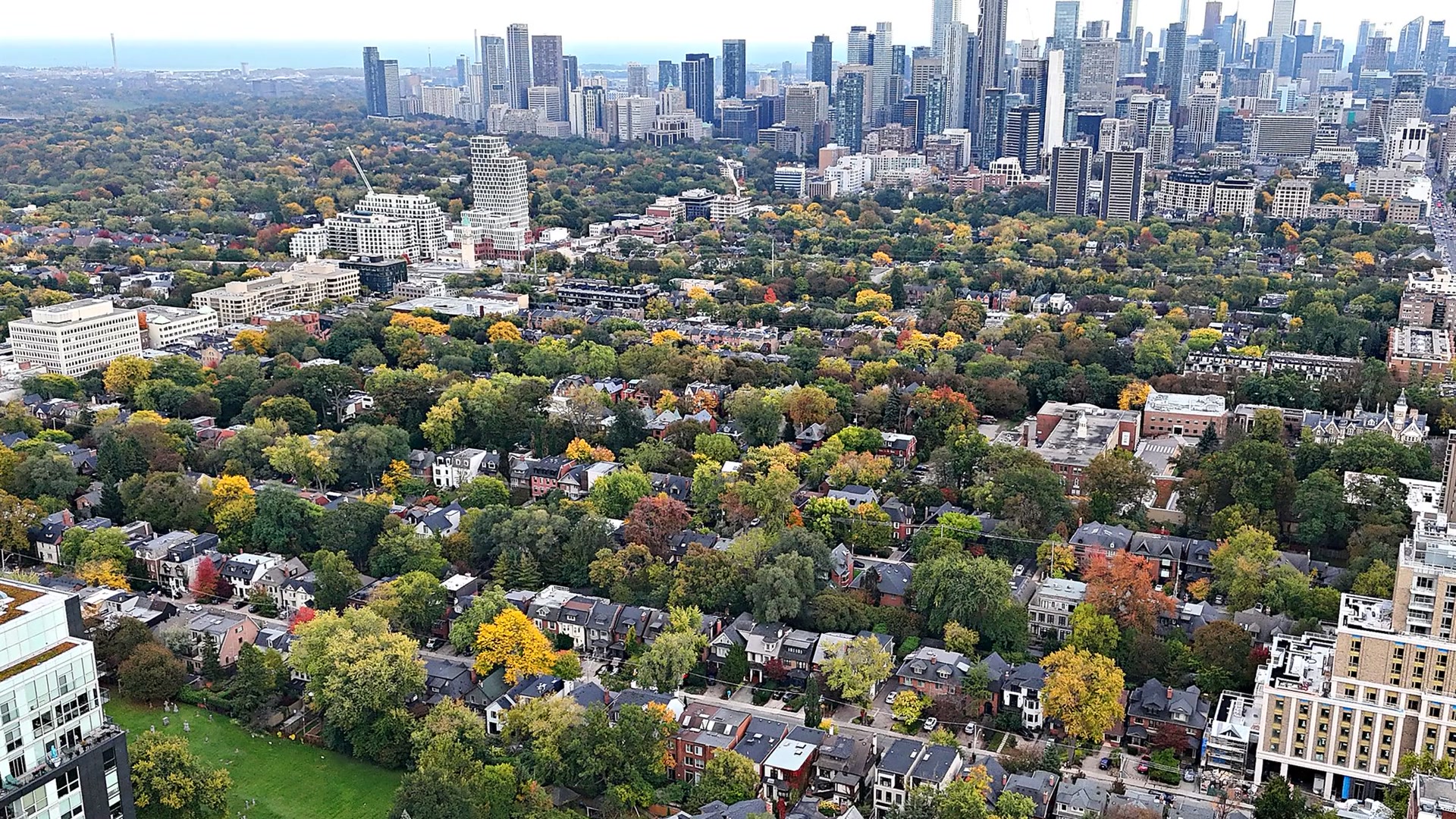

Deer Park homes and towers to the downtown skyline, from above in fall

Midtown Toronto

Deer Park

Living in Deer Park

Deer Park suits buyers who want a heritage house, a townhouse or a condo at Yonge and St Clair, with the subway, ravines and the Belt Line Trail close by.

Where it is

Deer Park runs from the Belt Line Trail south to Farnham Avenue, and from the Vale of Avoca ravine west to Avenue Road and Oriole Parkway, around Yonge Street and St Clair Avenue.

Homes

Many original houses, built between about 1875 and 1920, show Victorian and Edwardian styles. Deer Park has a mix of large detached houses, semi-detached houses, townhouses and condos, including high-rises with views of the skyline and the ravines. Many newer buildings were designed to match the older ones.

Main streets

Yonge Street and St Clair Avenue are lined with restaurants, independent shops, supermarkets, drugstores, banks and gyms, and the St Clair Centre is just east of Yonge. The Deer Park library branch is at 40 St Clair Avenue East.

Parks

The Belt Line Trail runs along the northern edge. David A. Balfour Park and the Rosehill Reservoir have trails, a reflecting pool, a waterfall and play areas, with stairs down into the ravine. Oriole Park has tennis courts, a splash pad and the Neshama Playground.

Transit

St Clair station on Line 1 is at Yonge Street and St Clair Avenue. The 512 St Clair streetcar runs west along St Clair Avenue on its own track.

Schools

Brown Junior Public School, 454 Avenue Road. Deer Park Junior and Senior Public School, 23 Ferndale Avenue. North Toronto Collegiate Institute, 17 Broadway Avenue. Northern Secondary School, 851 Mount Pleasant Road. Private schools nearby include Bishop Strachan School, De La Salle College, The Linden School, The York School and Upper Canada College. Check a home’s public schools with the TDSB’s Find Your School tool.

History

The name comes from the Heath family’s estate, set up in 1837 and called Deer Park for the deer that grazed there. The City of Toronto annexed Deer Park in 1908, and the subway reached Yonge and St Clair in 1954.

What our clients say

  • We have very high expectations of any professional we hire, and most don’t meet them.

    Jill and Daryl Johnston Sold in Leaside
  • Jethro’s experience and attention to detail really helped us navigate buying a new home and selling ours during very uncertain times.

    Naomi Kono Sold in Davisville Village
  • We appreciated Jethro’s highly knowledgeable guidance and counsel while looking for a house in midtown Toronto.

    Michael Long Bought in Davisville Village
  • Jethro recently sold our home in Davisville Village and we can’t say enough great things about our experience with him!

    Eric Hafeman Sold in Davisville Village
  • Jethro was incredibly helpful through the whole process of getting our house ready for sale as well as actually selling it.

    Marcel Gort Sold in Davisville Village
  • We sold our family home on Clifton Road in Moore Park with Jethro Seymour and the Seymour Team this fall.

    Zoe Kende Sold in Moore Park
  • Jethro’s knowledge of the area, marketing strategy, and sales success proved second to none.

    Heather Williams Sold in Davisville Village

View More Seymour Team Reviews

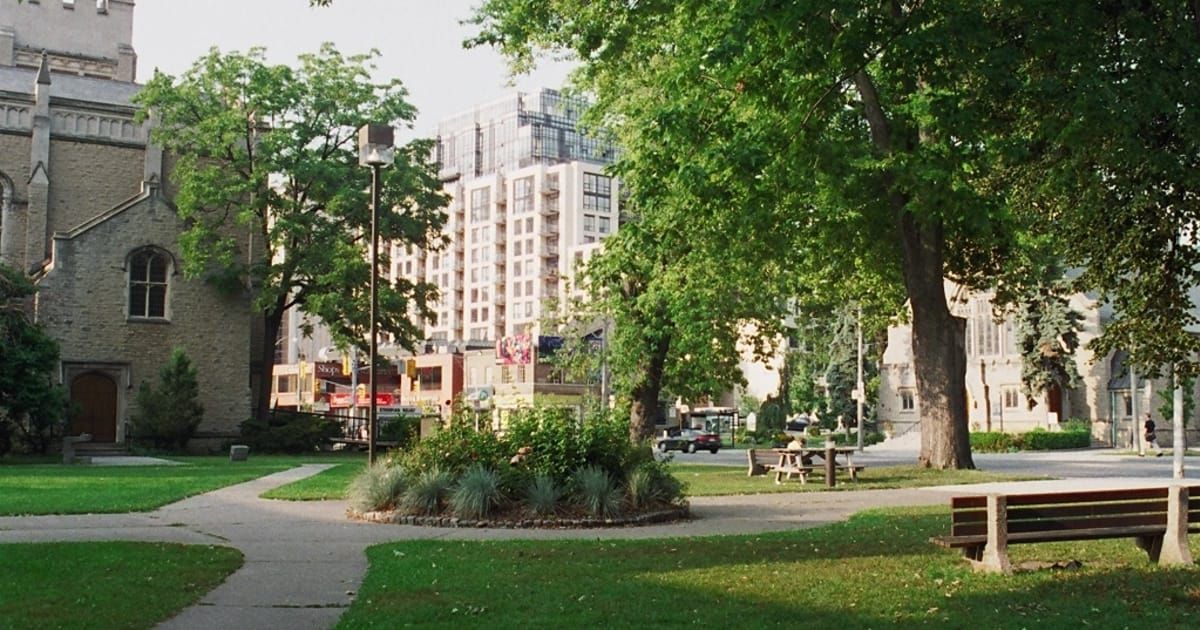
Deer Park homes and towers to the downtown skyline, from above in fallChurch, park path and apartment towers in Deer Park

The last twelve months

Deer Park home sales today

Freehold homes

8for sale now

Average sold priceDays on marketSold for, of asking
Detached$2,788,118Down 10.3% on the year before3197.0%
Semi-detached8 sales——
Homes sold each month
  1. DecDec 2025: 1 sold
  2. JanJan 2026: 2 sold
  3. FebFeb 2026: 3 sold
  4. MarMar 2026: 1 sold
  5. AprApr 2026: 3 sold
  6. MayMay 2026: 3 sold
  7. JunJun 2026: 3 sold
  8. JulJul 2026: 1 sold
  9. AugAug 2026: 3 sold
  10. SepSep 2026: 6 sold
  11. NovNov 2026: 1 sold

(Hover over or tap a month to see the number sold)

Condos

44for sale now

Average sold priceDays on marketSold for, of asking
One bedroom$520,357Up 1.4% on the year before2994.8%
Two bedrooms$1,167,640Up 3.4% on the year before4197.7%
Homes sold each month
  1. DecDec 2025: 5 sold
  2. JanJan 2026: 5 sold
  3. FebFeb 2026: 6 sold
  4. MarMar 2026: 6 sold
  5. AprApr 2026: 8 sold
  6. MayMay 2026: 11 sold
  7. JunJun 2026: 6 sold
  8. JulJul 2026: 17 sold
  9. AugAug 2026: 6 sold
  10. SepSep 2026: 7 sold
  11. NovNov 2026: 3 sold

(Hover over or tap a month to see the number sold)

Source: TRREB MLS® via PropTx, homes sold in the twelve months to November 21, 2026 inside our Deer Park boundary, and homes for sale on that day. Averages, never medians; each change is on the twelve months before; under ten sales the count shows instead. Months of inventory: homes for sale now over the average month's sales (1 to 3 reads as a seller's market, 4 to 5 balanced, 6 or more a buyer's). Prices go up and down.

Want to see what each home sold for in Deer Park?
See the sold prices

Homes for sale in Deer Park

Homes for sale in Deer Park

See every home for sale in Deer Park

See every home for sale in Deer Park

Listing information is deemed reliable but is not guaranteed accurate by PropTx or the Toronto Regional Real Estate Board. Data source: PropTx. Listings are refreshed from the MLS® at least daily.

The information provided herein must only be used by consumers that have a bona fide interest in the purchase, sale, or lease of real estate and may not be used for any commercial purpose or any other purpose.

The guide

The Full Deer Park Guide

Deer Park is an upscale neighbourhood in Toronto’s Yonge and St. Clair area, known for its unique combination of high-end luxury homes, budget-friendly townhouses and condos. Beyond its convenient location, Deer Park offers a unique combination of natural beauty and urban chic, and attracts residents with its trendy and hip yet historic and refined atmosphere.

It is bordered by the Beltline Trail in the north, the Vale of Avoca section of Rosedale Ravine in the east, Farnham Avenue in the south, and Avenue Road and Oriole Parkway in the west. Deer Park is generally considered one of midtown’s most livable districts.

History

The land on which Deer Park is built was known to First Nations peoples as “Mushquoteh,” a word that describes an open pasture in the midst of a forest where deer come to graze. Its traditional abundance of deer inspired the neighbourhood’s name, which is derived from the district’s original estate, established by the Heath family in 1837. The Heaths christened their acreage Deer Park, after the herds of wild deer that roamed the adjacent fields when Toronto was still in its infancy.

Read more Show less
Church, park path and apartment towers in Deer Park

By the 1850s, the Heath family’s 40-acre estate had been divided into 33 smaller lots, and numerous villas and cottages had been built on the surrounding lands. At that time, the small community also counted a school, a general store, a hotel, and a horseracing track among its features.

Toronto continued to grow and take shape around the Heath family’s original estate, and in 1874, the entire Heath acreage had been sold off. As the 19th century drew to a close, Toronto’s old Metropolitan Railway was making its way toward the neighbourhood, leading Deer Park to be annexed into Toronto by city officials in 1908.

Most of Deer Park’s oldest houses date to around 1875. By the 1920s, the neighbourhood had begun to evolve into its modern form. It won favour as a preferred residential locale for Toronto’s emerging upper-middle class, and entered a period of rapid development and modernization with the 1954 arrival of the TTC subway at the intersection of Yonge and St. Clair.

Architecture

Many of Deer Park’s original houses still stand, with most being built between about 1875 and 1920. Homes dating to this era generally display characteristics associated with the Victorian and Edwardian architecture styles.

Read more Show less

Definitive features of Victorian architecture include tall, narrow, and asymmetrical building profiles with decorative elements like turrets, towers, large bay windows, and ornamental trim. Edwardian architecture is similar, but tends to be less elaborate, favouring more open and understated designs with restrained and tasteful accentuations.

Many of the neighbourhood’s newer houses, condominiums, and townhouses were specifically designed to match the historic character of Deer Park’s existing residential buildings. The area features some high-rise developments, and in these buildings, residents commonly enjoy sweeping views of the downtown Toronto skyline or impressive views of the ravines and parklands that surround the district.

Real Estate Options

Deer Park offers a strong balance of houses, townhouses, and condominiums. At any given time, buyers will typically have a wide-ranging selection of each of these property types to choose from.

Read more Show less

As an upscale Toronto neighbourhood, most of Deer Park’s detached heritage houses are larger and set on generously sized lots with yard space. Semi-detached houses are somewhat rarer than detached homes, but are still found in healthy numbers across the neighbourhood. First-time buyers and those seeking smaller, more intimate properties will usually migrate toward more recently built properties, or to the many apartment-style condos found throughout the area.

Get your Deer Park home’s value

Demographics

Deer Park is a family-friendly area that is also popular with young professionals and adults of working age. Recent census data indicates an estimated population of 11,600 people, with concentrations of children, youth, and seniors that align with citywide averages.

Read more Show less

The approximate average annual income of a Deer Park household is about $110,000, and a very large majority (91%) of adult residents have completed higher education. Deer Park’s ownership-to-renter ratio is currently reported at 68% owners and 32% renters.

Shopping and Dining

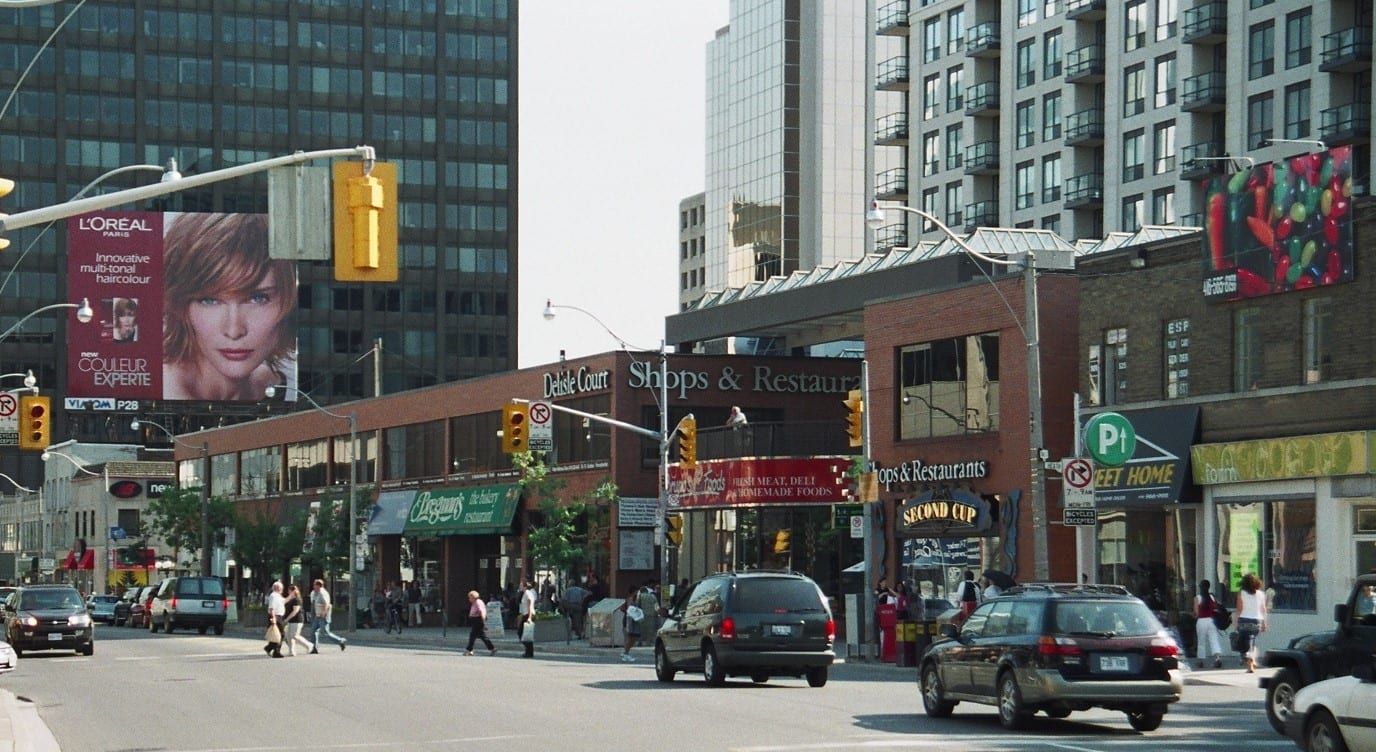
The intersection of Yonge and St. Clair is a thriving commercial hub, with an especially dense concentration of trendy eateries. Deer Park has been a major beneficiary of Toronto’s fast-evolving food scene, and many of its newer restaurants have become popular with gastronomy aficionados throughout the GTA.

Read more Show less
Street-level shops and office towers in Deer Park

Residents enjoy convenient access to authentic cuisines from around the world, with a varied array of establishments serving up flavourful fare including Chinese, Japanese, Thai, and Middle Eastern cuisines, among others. The neighbourhood also includes plenty of pubs, take-out pizzerias, and quick-service diners.

Most of Deer Park’s local retailers are of the independent variety, though the St. Clair Centre just east of Yonge Street is home to a choice collection of franchise stores. For a big-box shopping experience, residents can head west down St. Clair to the Stockyards shopping centre, which opened in 2014. Stockyards offers ample parking and a convenient collection of popular chain stories. One of Toronto’s largest malls, the Yonge Eglinton Centre, is also within walking distance of Deer Park.

Museums and Cultural Attractions

While Deer Park is not known for its museums, it is home to the Muse Gallery, which is located a few blocks south of St. Clair Avenue at 1230 Yonge Street. This intimate studio and exhibition space specializes in contemporary fine art collections, and regularly features work by both emerging and established artists.

Read more Show less

Situated a short distance from the southwest corner of Yonge and St. Clair, St. Michael’s Cemetery is an important and unique historic Toronto landmark. Established in 1855, it is the city’s oldest Catholic burial ground and houses some 29,000 gravesites. Surrounded by homes and buildings, St. Michael’s is accessible only via a narrow alleyway that exits onto Yonge Street.

Parks and Recreation

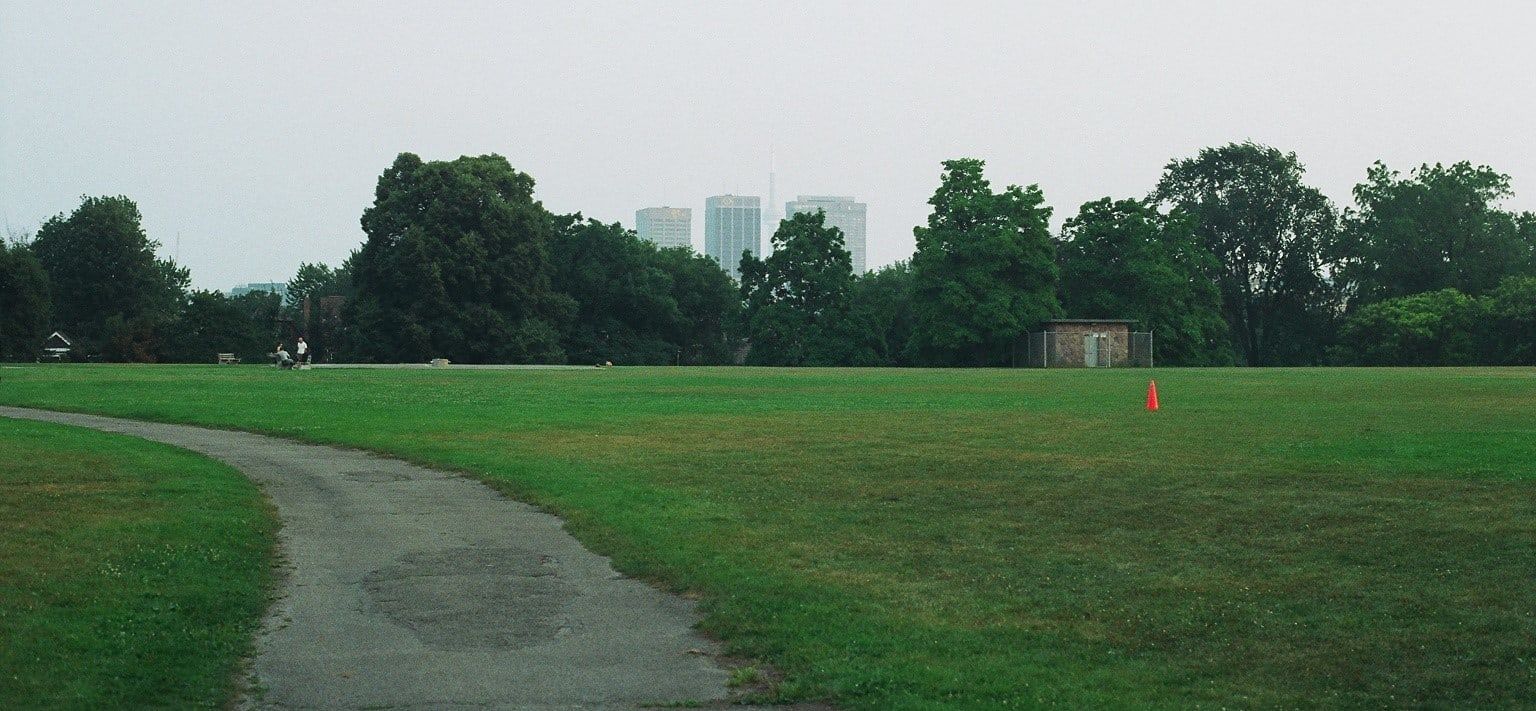
One of the primary attractions of Deer Park is its excellent green spaces. The Beltline Trail abuts the neighbourhood’s northern boundary and features nine kilometres of walking, hiking, and cycling paths that creatively reinvigorated a defunct railway line.

Read more Show less
Open parkland and a walking path in Deer Park

Other major local parklands include David Balfour Park and Rosehill Reservoir, which meld together to form what many consider to be midtown Toronto’s most beautiful outdoor preservation area. On its upper level, the parkland includes peaceful seating facilities, walking and cycling trails, children’s play areas, a stunningly beautiful reflecting pool, and a tranquil waterfall. Staircases descend into the ravine’s lower reaches, which are so thick with trees, greenery, and dramatic natural scenery that visitors can easily forget they’re in the heart of Canada’s largest city.

Oriole Park is a favourite focal point of community activity, with tennis courts, picnic areas, a summertime splash pad, and excellent play facilities for children. The recently upgraded Neshama Playground is one of Toronto’s most inclusive and complete fun zones for kids with swings, climbing gyms, a merry-go-round, interactive musical features, and many other unique features.

Day-to-Day Living and Public Transportation

Major supermarkets, specialty food retailers, drugstores, banks, fitness clubs, and professional offices are all readily available in Deer Park, especially along the St. Clair Avenue and Yonge Street corridors. The neighbourhood also benefits from excellent public transit connections, with easy access to the Yonge branch of the TTC subway’s Line 1 via St. Clair station. The 512 St. Clair streetcar runs on its own central track along St. Clair Avenue from Yonge Street to Weston Road.

Read more Show less

The Yonge and St. Clair intersection features a Walk Score of 88/100 and a Transit Score of 87/100. Professionals who work downtown benefit from a short and easy commute, as a subway ride to Union Station takes less than 15 minutes.

Libraries

The neighbourhood is served by the Deer Park branch of the Toronto Public Library, which is located at 40 St. Clair Avenue East.

Schools

Locally accessible primary and secondary schools include:

Read more Show less
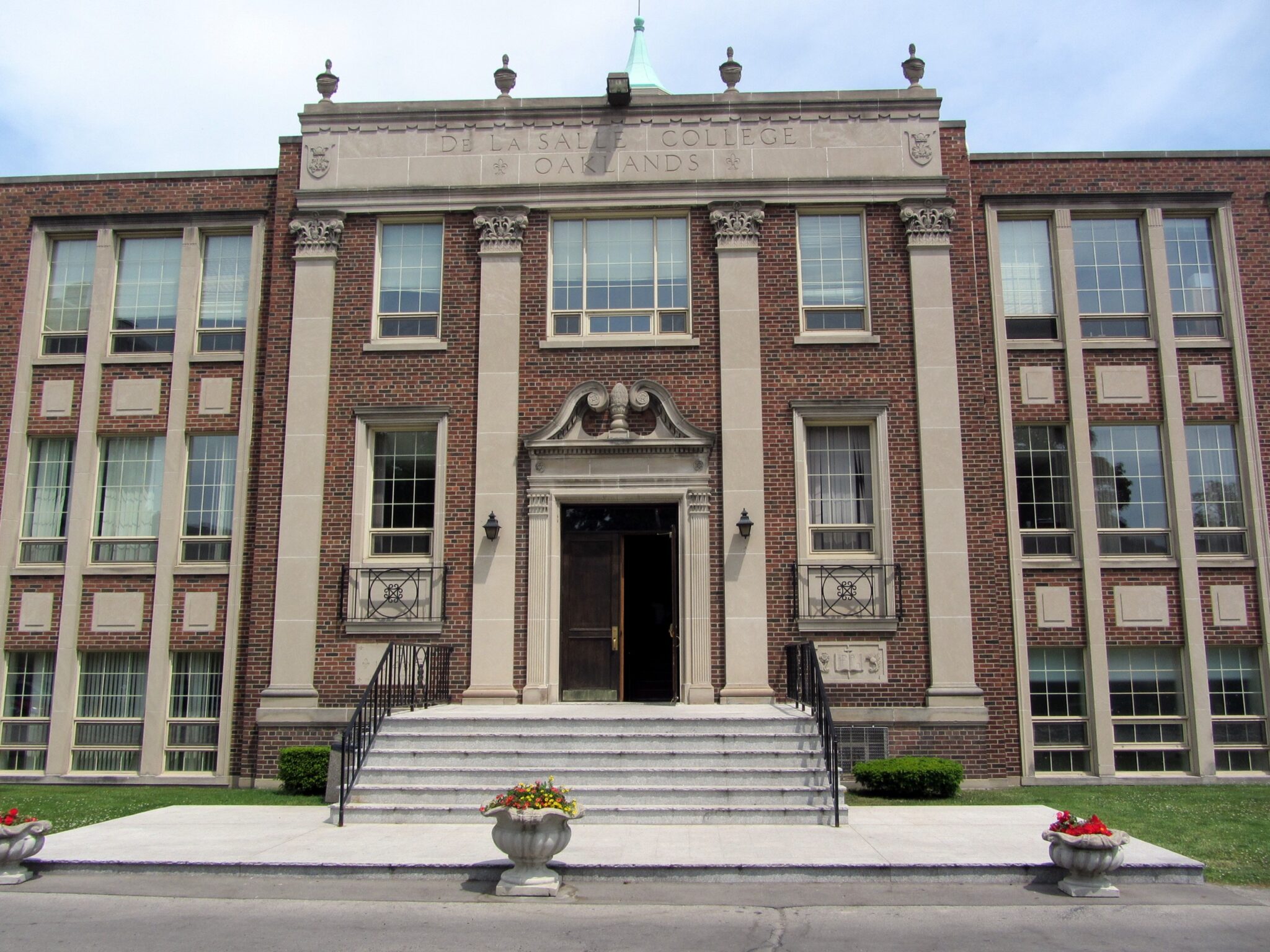
The brick and stone front entrance of De La Salle College Oaklands on Farnham Avenue
De La Salle College Oaklands, Farnham Avenue, May 2012. Photo: Loozrboy, CC BY-SA 2.0, via Wikimedia Commons
  • Brown Junior Public School (454 Avenue Road) (dual-track English and French immersion)
  • Deer Park Public School (23 Ferndale Avenue) (junior and senior public school)
  • North Toronto Collegiate Institute (70 Roehampton Avenue)
  • Northern Secondary School (851 Mount Pleasant Road)

Several of Toronto’s top private schools are also located in or near Deer Park:

  • Bishop Strachan School (298 Lonsdale Road)
  • De La Salle College (131 Farnham Avenue) (private Catholic school, grades 5-12)
  • The Linden School (10 Rosehill Avenue)
  • The York School (1320 Yonge Street) (Montessori school, junior kindergarten to grade 12)
  • Upper Canada College (200-220 Lonsdale Road)

Please note that private school admissions are governed by the internal policies of the individual institutions listed above. For further information, contact the school directly.

Fun Facts

Toronto police used the property at 40 Heath Street West to conduct a stakeout targeting the infamous Boyd Gang, a criminal ring that conducted a string of brazen robberies and prison escapes during the late 1940s and early 1950s. The gang’s figurehead, Edwin Boyd, was hiding out at the house next door, and was apprehended in March 1952. Many years later, the prominent South African anti-apartheid theologian Archbishop Desmond Tutu stayed at the 40 Heath Street West property during an official visit to Toronto.

Read more Show less

Famous former Deer Park residents include the likes of:

  • Pianist Glenn Gould
  • Writers Farley Mowat, Margaret Avison, and Joy Fielding
  • Group of Seven artist J.E.H. MacDonald
  • Stage, television, and film actor William Hutt

Get your Deer Park home’s value

Jethro Seymour, MCNE

Jethro Seymour, one of the Top Midtown Toronto Real Estate Brokers, is a midtown Toronto residential specialist with over 20 years of sales experience in real estate, marketing, construction and publishing. He has helped many families find homes in Toronto’s great neighbourhoods, and has extensive knowledge of local markets, new home construction, resale home sales, and the condo market. Living in midtown Toronto, Jethro previews many of the homes that come to market for his clients and inventory knowledge. Jethro specializes in Midtown Toronto, Davisville Village and Leaside neighbourhoods.

Your questions about Deer Park

Where is Deer Park?

Deer Park runs from the Belt Line Trail south to Farnham Avenue, and from the Vale of Avoca ravine west to Avenue Road and Oriole Parkway, around Yonge Street and St Clair Avenue.

What kinds of homes are in Deer Park?

Many original houses, built between about 1875 and 1920, show Victorian and Edwardian styles. Deer Park has a mix of large detached houses, semi-detached houses, townhouses and condos, including high-rises with views of the skyline and the ravines. Many newer buildings were designed to match the older ones.

What does a house cost in Deer Park?

In the twelve months to November 11, 2026, 31 freehold homes sold in Deer Park at an average price of $2,797,710, down 7.2% on the twelve months before, in an average of 30 days on market (TRREB MLS® via PropTx, sold listings within The Seymour Team's Deer Park boundary, pulled November 11, 2026). Prices go up and down, and the figures on this page refresh each month.

Where do people shop in Deer Park?

Yonge Street and St Clair Avenue are lined with restaurants, independent shops, supermarkets, drugstores, banks and gyms, and the St Clair Centre is just east of Yonge. The Deer Park library branch is at 40 St Clair Avenue East.

Where are the parks in Deer Park?

The Belt Line Trail runs along the northern edge. David A. Balfour Park and the Rosehill Reservoir have trails, a reflecting pool, a waterfall and play areas, with stairs down into the ravine. Oriole Park has tennis courts, a splash pad and the Neshama Playground.

How do you get around Deer Park by transit?

St Clair station on Line 1 is at Yonge Street and St Clair Avenue. The 512 St Clair streetcar runs west along St Clair Avenue on its own track.

Which schools serve Deer Park?

Brown Junior Public School, 454 Avenue Road. Deer Park Junior and Senior Public School, 23 Ferndale Avenue. North Toronto Collegiate Institute, 17 Broadway Avenue. Northern Secondary School, 851 Mount Pleasant Road. Private schools nearby include Bishop Strachan School, De La Salle College, The Linden School, The York School and Upper Canada College. Check a home’s public schools with the TDSB’s Find Your School tool.

Can I see what homes in Deer Park sold for?

Yes. Sold prices and listing history for individual homes are shown to signed-in members; the sign-up takes a minute and is free. The averages on this page are open to everyone and refresh each month.

How can I find out what my home in Deer Park is worth?

Ask for a written evaluation through the form on this page. A short visit comes first, because photos and square footage miss the things that move a price in Deer Park. The evaluation shows the recent sales it is based on.

Talk to our Deer Park expert

This field is for validation purposes and should be left unchanged.
Best time to call?